Case Studies
What was asked, what I chose, what changed in the scene.
Sitting on the Seashore, First Theme Entrance (Beach)
Soggetto Obsoleto · Reveal · 01:44
 01:44Theme entranceMajor-to-minor landingPiano ticksEmotionRelease
Sitting on the Seashore, First Theme Entrance (Beach)
Soggetto Obsoleto · Reveal · 01:44
Marco reaches the beach. His father is already there, facing the sea. This is the first cue where the score is allowed to bloom fully. The music must open emotional space from the inside, not illustrate the location.
- A: Only piano ticks. No theme. Too cold, no emotional doorway.
- B: Theme on father reveal (light strings + piano + airy synth), stop right before the first request to sit.
- C: Theme earlier during the walk. Feels manipulative and telegraphs the moment.
Goal: unlock Marco's emotions for the first time after a full film of restraint, but without catharsis. 0:00-0:32: only piano ticks, acting as an emotional clock (time held, no melody). 0:32-1:44: the theme, in G major, enters on the father reveal with piano leading, light strings, and an airy synth bed. The orchestration stays deliberately clean and restrained so it opens space without pushing the viewer, then cuts before 'May I sit here with you?' so dialogue lands clean. Harmony keeps a major colour but lands in minor: G-F#m-A-Em, with B minor withheld until the final chord (promise held back, release not complete).
- Delivery format: WAV (linear PCM)
- Specs: 48 kHz, 24-bit
- Sync: aligned to final picture
- Stems: Piano, Strings, Synth
- Alt: reduced version for dialogue/editorial flexibility
- Clean filenames and versioning
I Veneti Antichi, The Battle With The Spartans (Action)
I Veneti Antichi · Action · 04:59
 04:59Battle rhythmTimbri antichiModern orchestraLow strings incipitTrombones
I Veneti Antichi, The Battle With The Spartans (Action)
I Veneti Antichi · Action · 04:59
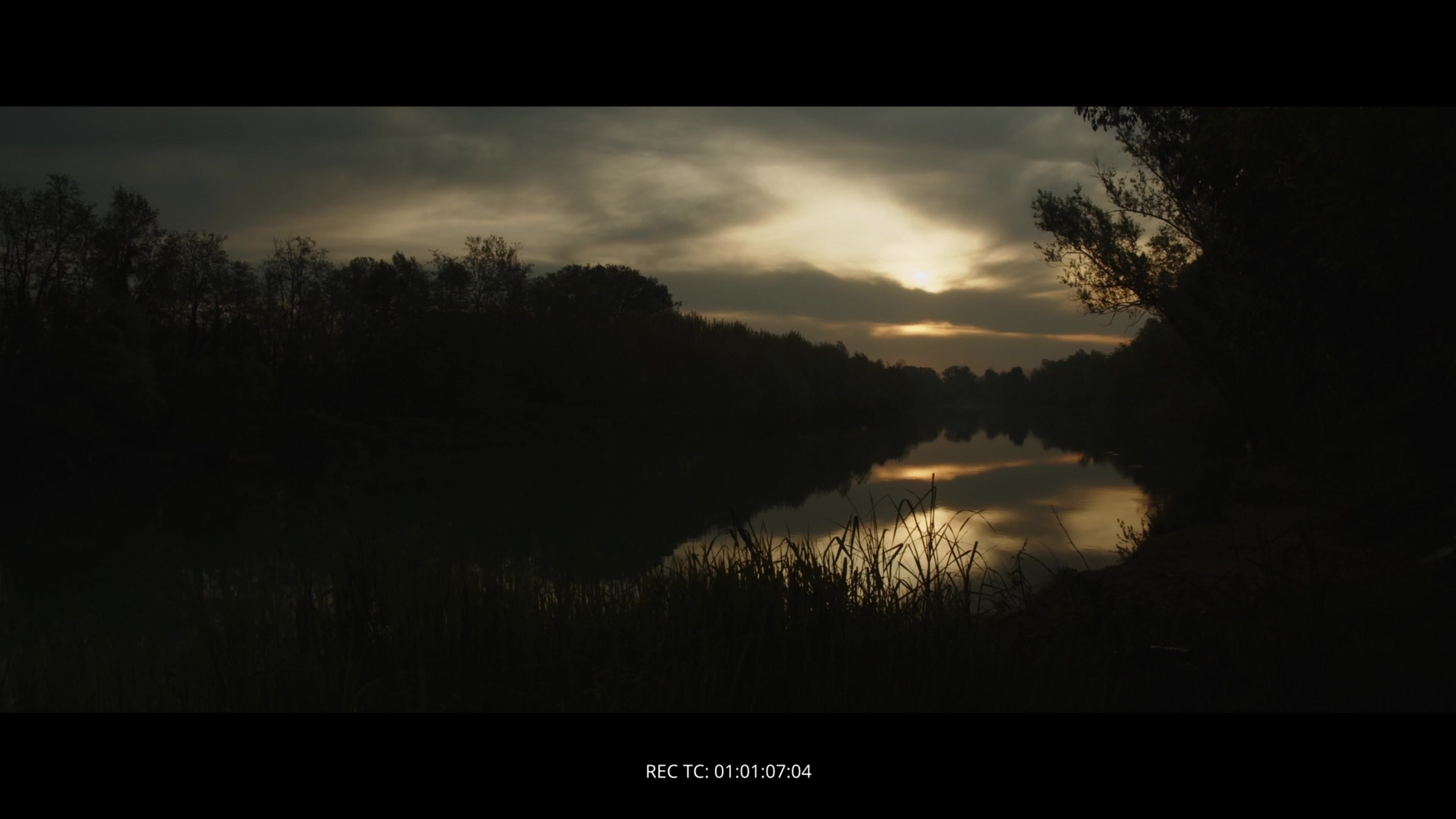
Reconstruction of the battle with the Spartans, built on fast cuts and long battlefield wides. The sequence needs drive without turning into a modern action trailer, and it must leave space for historical narration and sound design.
- A: Percussion-only pulse. Too dry and not enough identity.
- B: Low strings pulse, brass calls on shifts, full orchestra only at the first clash.
- C: Full orchestral wall from the start. Overwhelming and flattened the dynamics.
Built on a low strings ostinato and a heartbeat kick to keep the pulse steady while the edit accelerates. Short brass calls and trombone figures mark shifts in formation, but the full orchestra is held back until the first clash, so the impact reads as a narrative turn instead of constant intensity. After the collision, the harmony opens into sustained low strings to let the aftermath breathe while keeping tension under the narration.
- Delivery format: WAV (linear PCM)
- Specs: 48 kHz, 24-bit
- Sync: aligned to final picture
- Alt: reduced percussion for VO
- Stems: strings, brass, percussion
- Separate stems where needed, clear naming and tracked versions for a safe post delivery.
Eris Reads, The Banshee Story and the First Cough (Dialogue)
La Sonata Del Chaos · Dialogue · 00:??
 00:??Theme layeringMotif seedForeshadowingBanshee motifPiano
Eris Reads, The Banshee Story and the First Cough (Dialogue)
La Sonata Del Chaos · Dialogue · 00:??
La Sonata Del Chaos is a short film where a family folktale, the Banshee, shifts from a spoken legend into a real force inside the home. The story follows Eris through grief after her violin teacher's death, and the Banshee idea later becomes inseparable from an incurable illness that hits the mother and then Talia. This cue sits inside a warm bedtime conversation where the myth is spoken aloud, and the mother's cough quietly reframes it as something already inside the house.
- A: Only Eris theme on soft piano, no other references.
- B: Eris theme plus a short Talia hint, still purely domestic.
- C: Eris theme on piano, a gentle Talia hint, and a minimal Banshee accent exactly on the cough, then immediate return to domestic neutrality.
I treated this as a dialogue bed with a leitmotif function. The piano carries Eris in a fragile, domestic profile to keep the scene human. Talia appears as an incomplete warmth marker to build attachment early. On the cough, a minimal Banshee fingerprint briefly leaks in. It is a contour, not a full phrase. The point is to connect myth and illness as two faces of the same narrative force, while keeping the scene believable and intimate.
- Delivery format: WAV (linear PCM)
- Specs: 48 kHz, 24-bit
- Sync: aligned to final picture
The Mother's Tale, Banshee Motif in Focus (Dialogue)
La Sonata Del Chaos · Dialogue · 00:52
 00:52LeitmotifMotif recallForeground themeForeshadowingMystery
The Mother's Tale, Banshee Motif in Focus (Dialogue)
La Sonata Del Chaos · Dialogue · 00:52
La Sonata Del Chaos is a short film where a family folktale, the Banshee, shifts from a spoken legend into a real force inside the home. The story follows Eris through grief after her violin teacher's death, and the Banshee idea later becomes inseparable from an incurable illness that hits the mother and then Talia. The mother tells her daughter the legend of the Banshee. The motif already exists in the score, but here it becomes audible and central for the first time, carrying the scene without stepping on the dialogue.
- A: Room tone and light pad only. Clear dialogue but no thematic seed.
- B: Piano bed plus short motif on the first Banshee mention.
- C: Full motif early. Draws too much attention away from the story.
Piano-led orchestral writing built as a narrative hinge, not as background mood. At 0:09 Eris' theme enters on piano: it opens in C major, immediately slips to the minor subdominant (Fm), then pivots into C minor and confirms it through a cadential reconfirmation. This harmonic 'bright-to-shadow' turn makes grief and unease part of the theme's DNA while keeping the mother's dialogue pristine. At 0:32 Talia's motif is briefly hinted in Bb, intentionally clashing against Eris' C minor centre. The friction reads as vulnerability entering the room, not as a melodic decoration. Immediately after, the Banshee motif appears in violas and hammered dulcimer. The dulcimer's percussive string attack gives an 'alien' texture that suggests the monstrous and the unknown, with a controlled sense of threat. This is where the motif is allowed to speak clearly as the scene's spine, not just as a background hint. On the mother's cough, the cue introduces the 'illness' idea (0:48 to the end): related to the Banshee material but not identical, so the film can later separate folklore as myth from illness as body, while still keeping them psychologically linked.
- Delivery format: WAV (linear PCM)
- Specs: 48 kHz, 24-bit
- Sync: aligned to final picture
A Close Encounter in the Wood, Scream to Face-to-Face (Reveal)
La Sonata Del Chaos · Reveal · 01:02
 01:02Motif handoffOrchestral climbRunning rhythmHard stopCelesta
A Close Encounter in the Wood, Scream to Face-to-Face (Reveal)
La Sonata Del Chaos · Reveal · 01:02
La Sonata Del Chaos is a short film where a family folktale, the Basci (Banshee), shifts from a spoken legend into a real force inside the home. The story follows Eris through grief after her violin teacher’s death, and the Banshee idea later becomes inseparable from an incurable illness that hits the mother and then Talia. In this scene Eris wakes from a nightmare, hears Talia coughing, checks on her, then hears the Banshee screaming from the woods. She goes outside to confront it and finds it face-to-face.
- A: Atmosphere only, save the motif for the reveal. Too neutral and the run feels less motivated.
- B: Talia motif on celesta at 00:00, Banshee incipit in contrabasses at 00:20, orchestral climb into celli, violas, violins, then a more rhythmic drive for the run, hard stop on reveal.
- C: Banshee theme stated strongly before the scream. It announces the monster early and kills the discovery.
This cue is built as an identity handoff. 00:00: Talia’s motif enters on celesta, framing the house as fragile and innocent. 00:20 to end: the Banshee incipit starts in contrabasses, then transfers upward to celli, violas and violins, as if the threat is rising out of the ground and taking over the sonic space. As Eris runs into the woods the writing becomes more rhythmic, turning the motif into propulsion rather than a static horror colour. The cue ends exactly when Eris sees the Banshee, creating a hard stop that lets the face-to-face moment land on the image instead of on a musical sting.
- Delivery format: WAV (linear PCM)
- Specs: 48 kHz, 24-bit
- Sync: aligned to final picture
- Alt: no-music
- Stems: pads, room tone
Talia's Farewell, Last Story (Reveal)
La Sonata Del Chaos · Reveal · 02:00
 02:00Dialogue supportEmotionRelease
Talia's Farewell, Last Story (Reveal)
La Sonata Del Chaos · Reveal · 02:00
La Sonata Del Chaos is a short film where a family folktale, the Basci (Banshee), shifts from a spoken legend into a real force inside the home, later inseparable from an incurable illness that hits the mother and then Talia. In this scene Eris reads Talia’s favourite story one last time. The music functions as a soft eulogy: it does not comment on death, it accompanies the act of love that survives it.
- A: Only pads and choir. Too vague, lacked emotional contour.
- B: Strings-led melody with soft synth bed and wordless choir, held back dynamically under the reading.
- C: Stronger orchestral swell. Felt theatrical and pulled focus.
D minor, built as a lullaby that slowly becomes a requiem. The cue starts at 00:00 with warm strings, a soft synth bed, and wordless choir, not to dramatise the moment, but to make it feel sacred and close, like a whispered funeral praise. The orchestration stays light on purpose, so Eris’ reading remains the foreground and the music feels like a private breath around it. Harmonically the cue sits in D minor, one whole step above the Banshee’s centre, as if Talia’s innocence is placed ‘above’ the curse rather than inside it. That distance is the point: the illness wins physically, but the music frames Talia as untouched in spirit. The choir stays pure and non-theatrical, almost like air, while the strings carry the melody with long, unbroken lines, avoiding sharp attacks. By the final stretch the harmony stops searching and simply accepts. The cue does not resolve with triumph. It resolves with tenderness. It ends at 02:00 like the last page of a story being closed, gently, without noise.
- Delivery format: WAV (linear PCM)
- Specs: 48 kHz, 24-bit
- Sync: aligned to final picture
- Alt: lighter pulse
- Stems: pulse, low hits, textures
Opening Titles, Glass Resonance and the Storm Theme (Main Titles)
Claudio re · Atmosphere · 01:48
 01:48Opening titlesLeitmotifModern orchestraResonant texturePower paranoia
Opening Titles, Glass Resonance and the Storm Theme (Main Titles)
Claudio re · Atmosphere · 01:48
Claudio re is inspired by Hamlet. Claudio murders his own brother to take the crown and the queen, then rules under a surface of stability while the crime keeps echoing through the court. His guilt is real, but his repentance is not: he refuses the price of redemption because he will not give up what he stole. That split turns into paranoia, a cold logic of power: if he rose through blood, he can be taken by blood. The opening titles introduce the film’s core idea, the “storm”: not weather, but the irreversible disturbance Claudio has unleashed, moral, political, and psychological. The score’s job here is to make the world feel cracked from the first frame, and to establish the storm theme as consequence advancing, not as decorative mood.
- A: Orchestra-only. Too period, lacked psychological edge.
- B: Modern orchestra + synth pressure with bowed-glass resonance, then storm theme introduced as a slow advance.
- C: Heavier synth dominance. Felt less cinematic and reduced the tragic weight.
Hybrid modern orchestra and synth. The bowed-glass resonant colour is used as a signature hit only when the title appears, a brief, cutting vibration that reads as a crack in the world. Underneath, tension is held back until a short crescendo in strings and brass builds pressure, then the storm theme breaks in suddenly, like control snapping into consequence. The reference behaviour from Giacchino’s The Batman is used as a model for weight and clarity (low-register authority, simple thematic identity), but the impact here is defined by contrast: restraint first, then a sharp thematic eruption. The storm is not weather. It is Claudio’s irreversible disturbance made audible.
- Delivery format: WAV (linear PCM)
- Specs: 48 kHz, 24-bit
- Sync: aligned to final picture
For more info on the short

My Sin is Rotten, The Crown Trap (Dialogue)
Claudio re · Dialogue · 01:27
 01:27MonologueHarmonic corrosionAmbient synthPiano motifViola da gamba
My Sin is Rotten, The Crown Trap (Dialogue)
Claudio re · Dialogue · 01:27
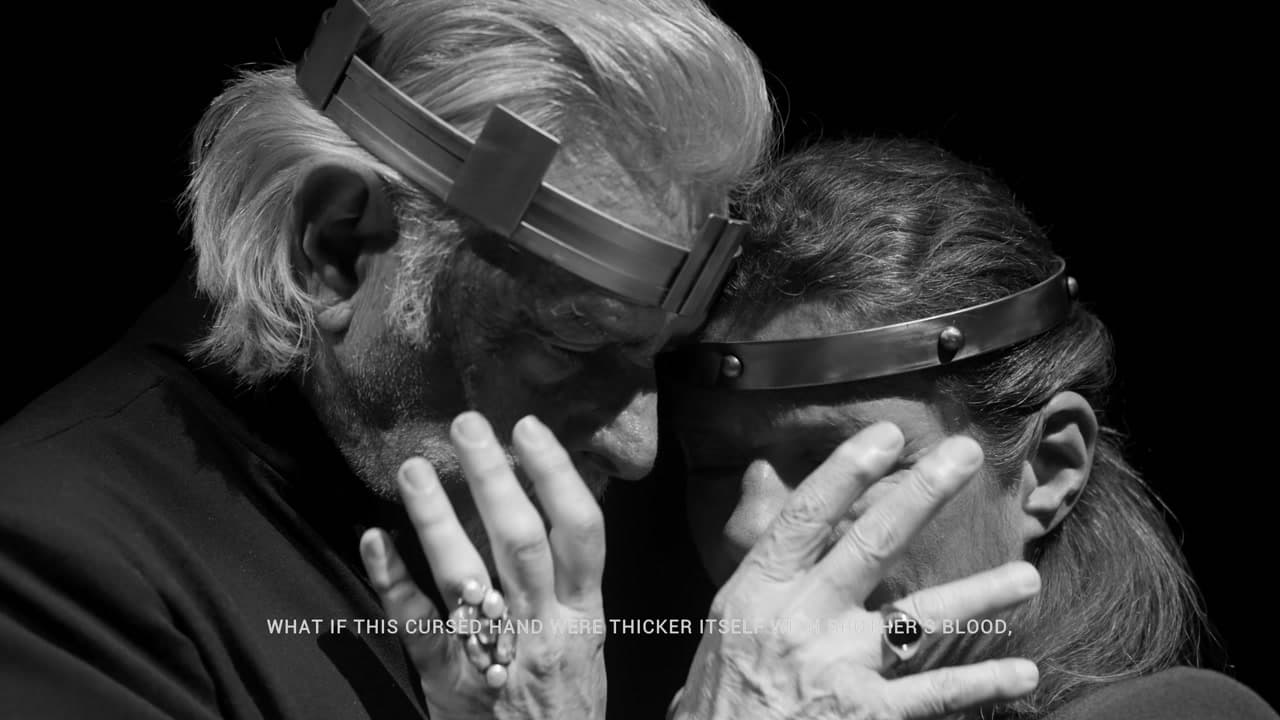
Claudio re is inspired by Hamlet. Claudio murders his own brother to take the crown and the queen, then rules under a surface of stability while the crime keeps echoing through the court. His guilt is real, but he refuses the price of repentance because he will not give up what he stole. In this monologue he names the sin as rotten and admits it is the oldest curse, the murder of a brother, then exposes the trap: forgiveness cannot ‘go through’ while he remains in possession of the fruits of the murder, the crown, ambition, and the queen. The cue mirrors that contradiction: a veneer of nobility struggling to stand over something fundamentally corrupt.
- A: Only synth ambience. Too flat, lacked character identity.
- B: Piano motif + dark ambient contamination, then D minor theme reveal with historical colour and rotten brass tail.
- C: More orchestral emotion. Felt sympathetic and reduced the rot.
The harmonic language is built around Claudio’s piano motif, kept exposed and intimate, then surrounded by dark ambient synth layers as if the camera is entering his sick mind and distorted emotional space. The piano carries the ‘human’ confession, while the synth bed acts like an internal fog that never clears. To underline the rot, the harmony is deliberately contaminated: non-chord tones, chromatic neighbours and foreign notes sit against the implied chordal centre, creating a controlled discomfort that reads as thought decay rather than jump-scare dissonance. These tensions must stay small and persistent, never turning into a dramatic gesture, so the audience feels the stench as something embedded in him. Orchestral elements appear sparingly as shadows, adding weight without stealing speech. The cue ends at 01:27 without a redemptive resolution, leaving Claudio suspended between confession and refusal.
- Delivery format: WAV (linear PCM)
- Specs: 48 kHz, 24-bit
- Sync: aligned to final picture
For more info on the short
My Crown, My Ambition, My Queen. The Crown Trap (Dialogue)
Claudio re · Dialogue · 01:27
 01:27MonologueHarmonic corrosionAmbient synthPiano motifViola da gamba
My Crown, My Ambition, My Queen. The Crown Trap (Dialogue)
Claudio re · Dialogue · 01:27
Claudio re is inspired by Hamlet. Claudio murders his own brother to take the crown and the queen, then rules under a surface of stability while the crime keeps echoing through the court. His guilt is real, but he refuses the price of repentance because he will not give up what he stole. In this monologue he names the sin as rotten and admits it is the oldest curse, the murder of a brother, then exposes the trap: forgiveness cannot ‘go through’ while he remains in possession of the fruits of the murder, the crown, ambition, and the queen. The cue mirrors that contradiction: a veneer of nobility struggling to stand over something fundamentally corrupt.
- A: Only synth ambience. Too flat, lacked character identity.
- B: Piano motif + dark ambient contamination, then D minor theme reveal with historical colour and rotten brass tail.
- C: More orchestral emotion. Felt sympathetic and reduced the rot.
The harmonic language is built around Claudio’s piano motif, kept exposed and intimate, then surrounded by dark ambient synth layers as if we are entering his sick mind and distorted emotional space. Non-chord tones and foreign notes contaminate the implied centre, creating a controlled, persistent discomfort that reads as moral rot rather than theatrical dissonance. On the ‘Light! Light!’ section the cue reveals Claudio’s theme in full, in D minor. It carries a dramatic, almost ‘noble’ contour, but the nobility is a veneer: trombones stain the tail of phrases with a rotten aftertaste, and cadences refuse clean closure. Before “My queen?” the line is entrusted to viola da gamba, and historical colours (monochord, hurdy gurdy) enter to evoke the antique weight of the tale without turning it into pastiche. On the words “my queen” the orchestration blooms: full orchestra joins, the ancient instruments remain present, and the synth bed deepens, creating an epic surge of self-justification. The cue then undercuts that grandeur: final chords are deliberately dissonant and the trombones bring the corruption to the surface on Claudio’s last words. It does not resolve as repentance. It hangs as consequence, designed to connect seamlessly into the following section where Claudio’s guilt turns into confrontation and he is killed.
- Delivery format: WAV (linear PCM)
- Specs: 48 kHz, 24-bit
- Sync: aligned to final picture
For more info on the short
No Shuffling Up There, The Spectre Wins (Vision Fight)
Claudio re · Action · 00:??
 00:??Tempo automationDissonant braamsHeartbeat kickVisionGuilt
No Shuffling Up There, The Spectre Wins (Vision Fight)
Claudio re · Action · 00:??
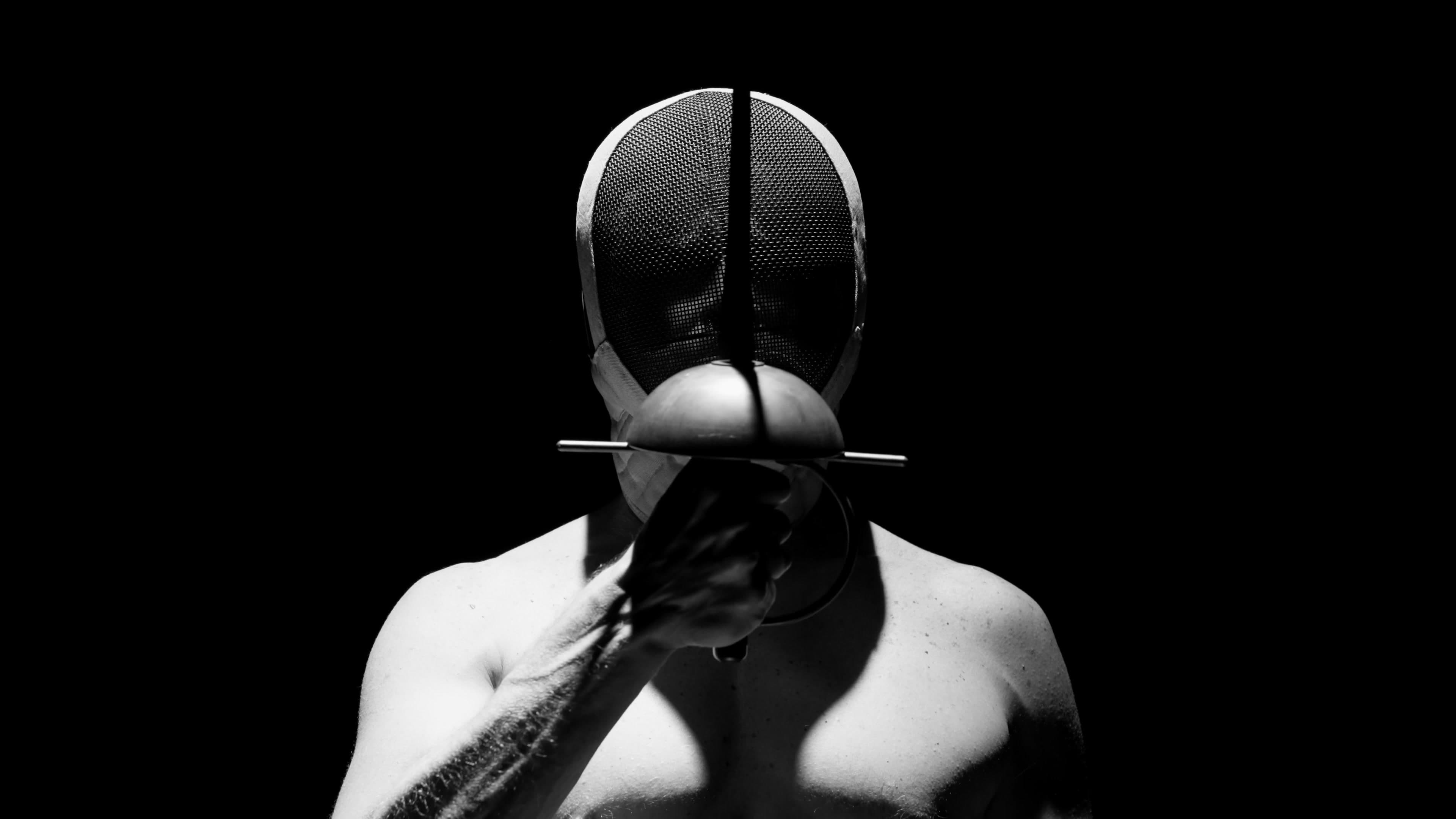
“But not up there? Ah no. Up there there is no trickery, eh? There, action exists in its true nature. And we ourselves are compelled to bear witness, as beggars, on the forehead of our guilt. Anyone. And then, what remains? [Music]” Claudio enters the imagined duel with the Spectre, is dominated and stabbed. The music starts when the words end.
- A: Dissonant braams only, no kick.
- B: Kick at a constant tempo, no slowdown and no stop.
- C: Braams plus benders plus a kick that accelerates, then slows to a stop on the stab.
Dissonant synth braams and unstable benders. Kick with tempo automation that mimics a heartbeat: it accelerates with anxiety and fear, then progressively slows until it stops when the Spectre stabs Claudio.
- Delivery: WAV, 48 kHz, 24-bit
- Stems: Braams, Benders, Kick, FX (labelled for post)
- Sync: kick stop aligned to the stab
For more info on the short
What If A Man Can't Regret, The Prayer That Fails (Dialogue)
Claudio re · Dialogue · 01:03
 01:03ReleaseEmotion
What If A Man Can't Regret, The Prayer That Fails (Dialogue)
Claudio re · Dialogue · 01:03
“...try what repentance can do. What can it not do? Yet what can it do if a man cannot repent? To die, to sleep, and heart attack. And with a sleep, to say we end the heartache and the thousand natural shocks of flesh. This is a consummation to be wished, devoutly to be wished. To die, to sleep—do we not dream ahead? bent close, stubborn, and you, heart of steel snares. Yes, but I orbit, like muscles in a child, just gone. Everything can end... ...repenting. [Music]” Claudio searches for a path to repentance but remains trapped by the real price of redemption. The scene works as a distorted echo of Hamlet’s central knots: conscience, guilt, the impossibility of action, and the desire for an end as escape.
- A: Distant drone + hit, no theme.
- B: String ostinato + ascending trombones, no theme.
- C: Drone + ostinato + trombones + theme entrance on sparse sampled violins + hit.
Distant drum drone as judgment. Repetitive ostinato violins. Ascending dissonant trombones. Theme entrance on sparse sampled violins with intertwined aching lines. Trombones and percussion hits as fate advancing.
- Delivery: WAV, 48 kHz, 24-bit
- Stems: Drone, Violins (ostinato), Trombones, Theme strings, Percussion hits (labelled for post)
- Mix: dialogue safe, low end controlled, hits kept short for editorial flexibility
For more info on the short